Why IT Teams Are Replacing Jira and ServiceNow

Vlad Shlosberg
Founder
It is tempting to frame every shift in the ITSM market as a referendum on the incumbent platforms. That is usually too simplistic.
Jira and ServiceNow remain deeply capable systems. They are powerful, extensible, and well established. For many organizations, they continue to play a central role in governance, workflow management, reporting, and operational control. This is not a story about those platforms becoming irrelevant.
It is a story about expectations changing around them.

The User Experience Problem
Over the last several years, internal service delivery has moved into a different operating context. Employees now expect service interactions to happen in the same environments where work already happens. Managers expect approvals to be fast and contextual. IT teams are being asked to support more applications, more cross-functional workflows, and more automation without adding equivalent headcount.
The result is that many organizations are rethinking not just their system of record, but the user experience built around it.
That distinction is important because many IT teams are not replacing Jira or ServiceNow outright. They are replacing the way people experience them.
Where the Friction Actually Lives
In customer conversations, a common theme is that the back-end platform is often not the immediate source of dissatisfaction. The friction appears at the front door:
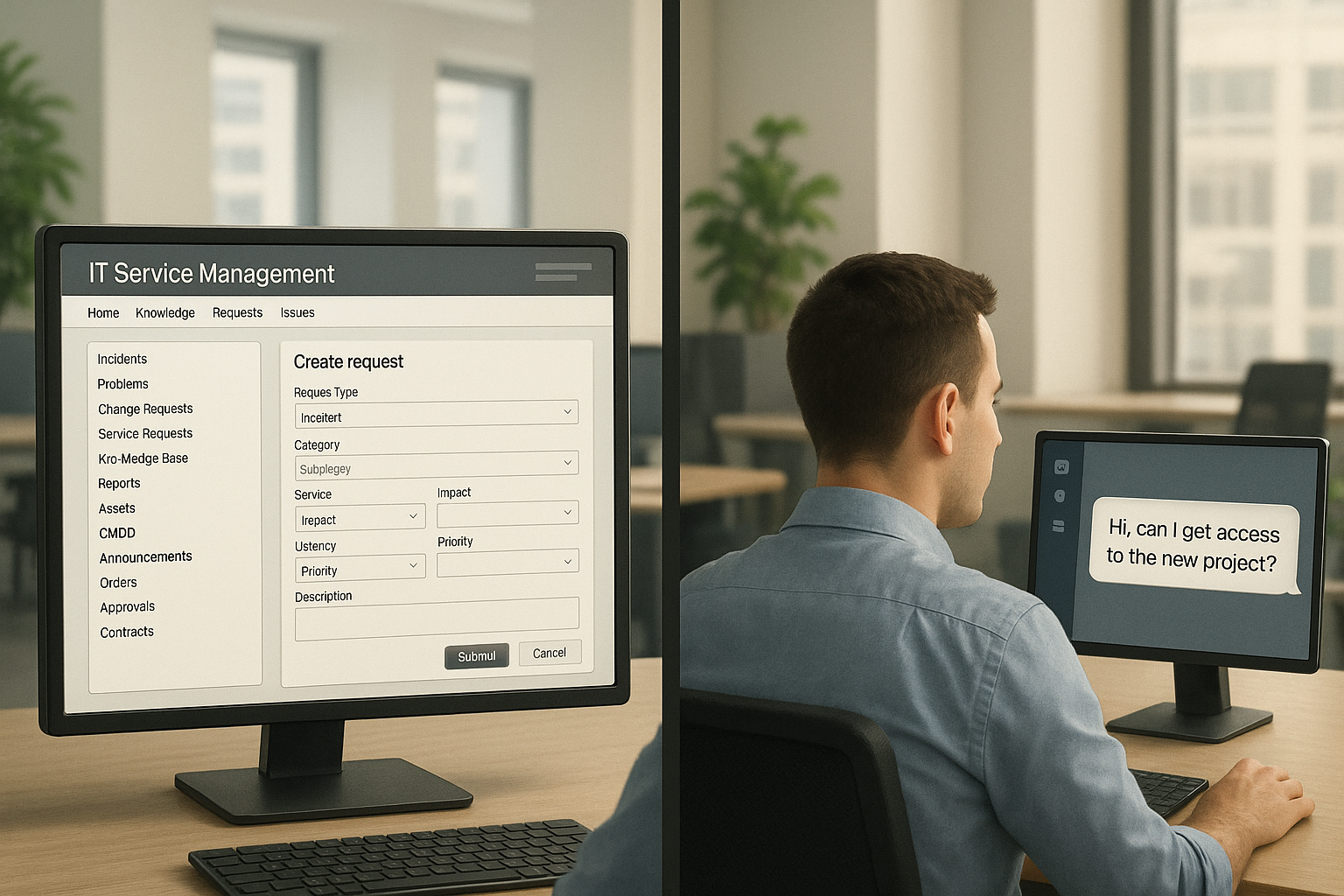
- Employees do not want to leave Slack or Teams to navigate a portal
- Request forms can feel too broad or too rigid
- Internal teams want to manage approvals, notifications, and follow-up actions closer to where conversations are already taking place
The pressure is not simply to modernize infrastructure. It is to reduce the amount of process translation required from the end user.
This is where the new generation of service approaches is gaining traction.
The Behavioral Gap
The traditional model assumed that employees would enter a system built primarily around administrative needs: categorization, assignment, queues, SLAs, forms, and records. Those needs are legitimate, and they are still necessary. But employees rarely think in those terms. They think in terms of the immediate task: get access, fix the issue, ask the question, move forward.
That behavioral gap creates inefficiency. The more heavily the service experience depends on users adopting the logic of the service management platform, the greater the risk that requests will begin outside the intended workflow. That is why informal channels, direct messages, and side conversations remain so persistent even in companies with strong ITSM investments.
What Teams Actually Want
What many teams now want is not less process, but less visible process. They want:
- Employees to be able to request help in chat
- Managers to approve within the flow of work
- IT to maintain structured records without forcing every interaction through a conventional portal experience
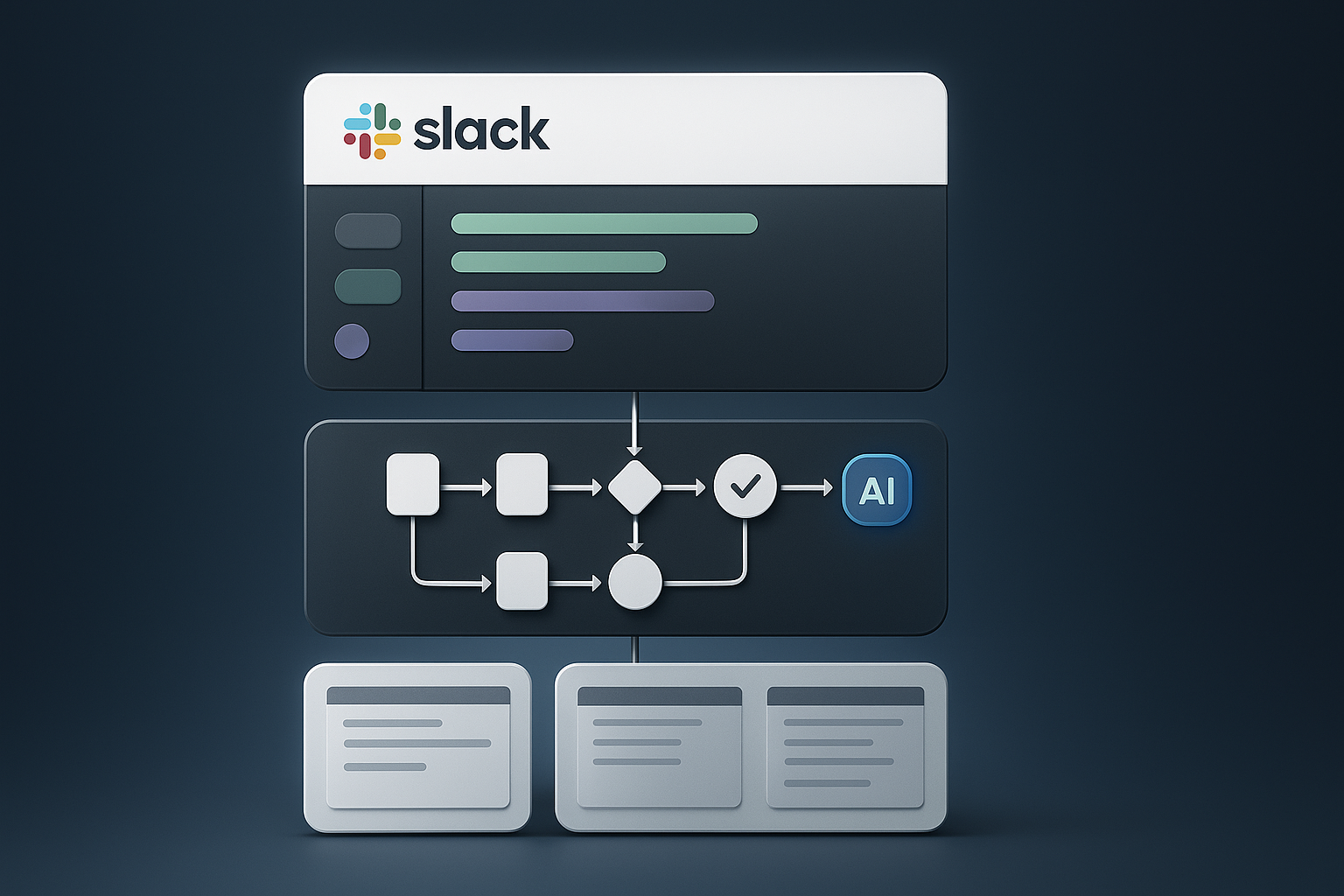
That is one reason lighter, more automation-oriented service layers are increasingly being adopted. These platforms or interfaces often do not try to compete with enterprise systems on every dimension. Instead, they focus on making intake, triage, approvals, and follow-up feel native to modern work environments.
In some cases, they replace the full stack. In many others, they sit in front of a system like Jira or ServiceNow, effectively changing the interaction model while preserving the operational backbone.
The Real Question
This is a meaningful shift in how IT leaders should think about replacement decisions. The relevant question is no longer, "Is Jira or ServiceNow good enough?"
It is, "Which parts of our service model require an enterprise platform, and which parts require a better user experience?"
For some teams, the answer will still favor a consolidated, end-to-end platform strategy. For others, it will mean retaining the system of record but reducing how often employees or even agents need to engage with it directly. That is particularly true in environments where chat-based intake, approvals, and automation now represent a more natural front-end experience.
Why This Shift Is Accelerating
There is also a broader operational reason this transition is gaining momentum. Internal service is no longer limited to classic help desk functions. It increasingly spans:
- Onboarding and offboarding
- App access provisioning
- Device management
- Finance approvals
- Vendor workflows
- Policy-driven actions across multiple systems
Many of these workflows depend less on the strength of a traditional ticket object and more on the speed and flexibility with which the surrounding process can be executed.
That is why modern service design increasingly values interoperability, conversational interfaces, and workflow automation alongside traditional ticketing rigor.
The Future Is Less Tolerant of Friction
To be clear, this does not mean the future is anti-ITSM. It means the future is less tolerant of friction. Large systems will continue to matter. But they will matter most when they operate as strong operational foundations rather than as mandatory user destinations.
The organizations moving effectively in this direction are not abandoning structure. They are repositioning it. They are preserving the controls they need while removing the ceremony users no longer accept.
That is the deeper story behind replacement trends. It is not really about platform dissatisfaction alone. It is about the fact that the center of gravity of work has moved, and service delivery has to move with it.
See how Foqal brings modern, chat-based service delivery to your existing ITSM infrastructure—improving the employee experience while maintaining the operational rigor you need.
Subscribe to our newsletter
Get the latest insights on IT operations, AI, and workplace productivity delivered to your inbox.
Ready to transform your support?
See how Foqal can help your team deliver faster, smarter support.
Start Free TrialRelated Articles
Why IT Teams Hate Logging Into Ticketing Systems
Discover why ticketing systems often fail and how integrating requests directly into Slack or Teams can eliminate friction while preserving IT governance.
The Problem with AI IT Support Bots
Discover why AI support bots often fall short and how a hybrid approach—combining AI‑driven knowledge retrieval with human‑guided workflows—can turn AI into a powerful accelerator for IT service delivery.
The Future of IT Onboarding: Fully Automated Day-1 Workflows
Discover how fully automated Day‑1 workflows transform onboarding from a chaotic checklist into a seamless, secure experience that boosts efficiency and showcases IT’s strategic value.